Philosophy of SAIBI-LX
A Pendulum Between City and Nature
Even as we stand in fear of nature’s unfathomable power, we continue to honor and respect it. We do not see it as something separate from humanity, but rather an extension of ourselves, an essential part of our existence. We find beauty in raw elements ― earth, stone, wood, and water ― while also cherishing the refinement of human craftsmanship. Moving fluidly between these realms, like a pendulum, we discover the richness of balance. It is reminiscent of a hakoniwa, a miniature garden that captures seamless gradations between nature and artifice, serenity and stimulation, the ordinary and the extraordinary. Rather than denying these contrasts, our spatial furniture embraces and holds them all in harmonious coexistence.
The Whole in One, One in the Whole
In traditional Japanese-style architecture, a house is conceived as a fluid composition of ma, empty spaces that are partitioned not by fixed walls but by folding screens and sliding doors. Without rigid boundaries, these homes expand organically for residents’ convenience over time, in contrast to Western notions of architecture dictated by blueprints. In Japanese interiors, the simple placement of an object can create an invisible boundary, fostering both a soft harmony and separation. Just as human relationships need not be defined by absolute unity, these spaces allow for both warm connection and comfortable distance. [Fig 1]
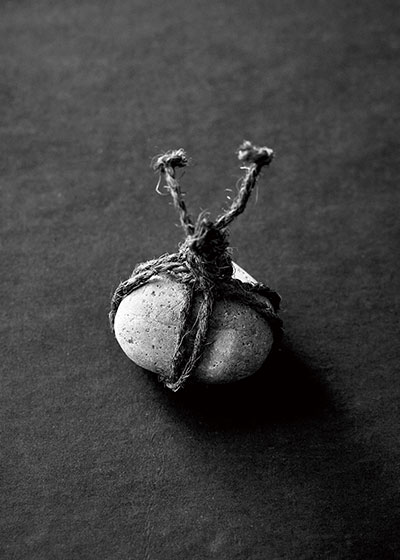
Fig 1. The Whole in One, One in the Whole
Echoes Beyond Words
Tracing the curve of a bamboo fan. Following the pond’s edge in a Japanese garden. One Zen saying goes, “You may go with the great river’s flow, or you may resist it,” teaching us that there is no need to impose artificial lines upon beauty. Every material holds within it the form it is meant to take. Our role is simply to honor that essence, allowing the quiet intuition of mono no aware ― a deep, fleeting appreciation of beauty or things ― to emerge. By attuning ourselves to this sensitivity, we reveal the natural curves waiting to be traced. It is only through this process that certain forms can come into being. [Fig 2]
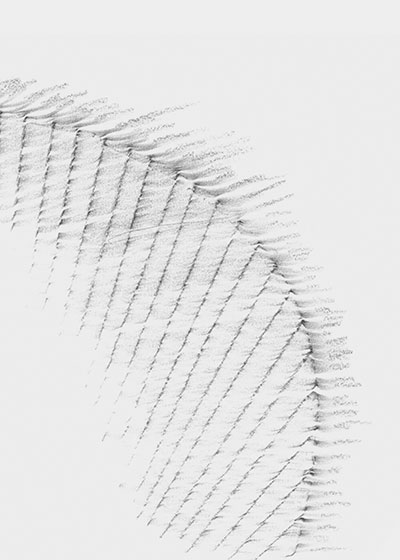
Fig 2. Echoes Beyond Words
Nature, Reflected in the Japanese Spirit
To the Japanese, humanity exists not apart from nature but within it. Poets have likened the changing seasons to lovers, while others have seen echoes of human life in kachofugetsu ― flowers, birds, wind, and moon. Since ancient times, Japanese people have projected human emotions onto nature and, in turn, discovered humanity within it. It is no surprise, then, that organic forms such as gourds and river stones have long served as inspiration or raw materials for design. For the Japanese, nature is both a mirror and a companion, a reflection of the self and an enduring symbol of belonging. [Fig 3]
― Then there are those who regard mountains, rivers, soil, grass, trees, tiles, and stones to be their own original natures.” (Muso Soseki)
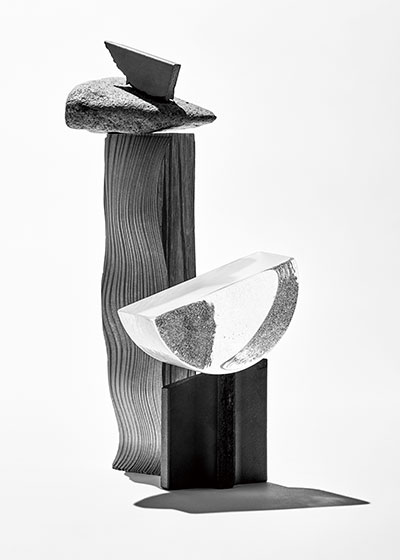
Fig 3. Nature, Reflected in the Japanese Spirit